The Best Time of Year to Paint Your Home in Connecticut
Painting your home isn’t just about picking the right color, it’s about choosing the right time of year. If you’re a Connecticut homeowner, you know how our climate swings: cold, damp winters; humid summers; salt‑air on the coast. All of that affects how paint performs. At J Stokes Contractors, we’ve learned that timing your painting project correctly can mean the difference between a finish that lasts and one that fails prematurely.
Whether you’re refreshing your interior before the holidays or protecting your exterior from New England’s weather extremes, choosing the best season for painting matters. Let’s dive in and help you figure out when to schedule your project so you get the best results.
Why Timing Matters for Connecticut Homeowners
In Connecticut, painting your home isn’t simply convenient when you have the time; it’s strategic. Here are key reasons:
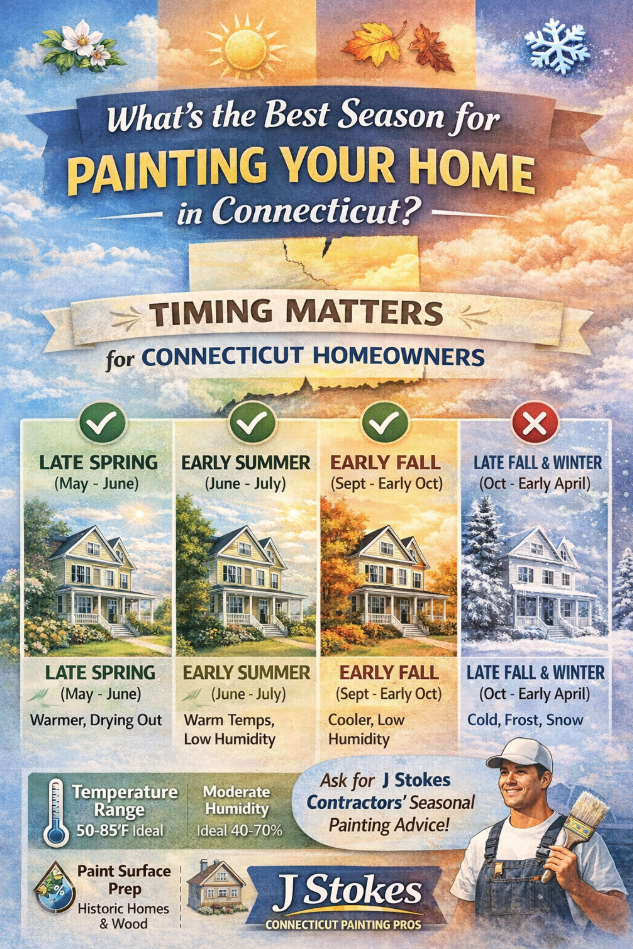
Temperature swings & freezing winters: Exterior surfaces that dip below 50 °F won’t allow some paints to cure properly. The cooler the surface and the air, the slower the film formation and the greater the risk of poor adhesion, sagging, or peeling.
Humidity and moisture issues: Especially along the coast (Long Island Sound, Mystic, New London) where salt air and moisture are constant, high humidity or surface moisture interfere with drying. This causes skinning, blistering, or mildew growth behind the paint.
Historic home styles & surfaces: Many CT homes are older or built with wood siding, detailed trim, or other materials that require high‑quality prep and optimal conditions. Doing that work in poor weather just increases risk.
Curing vs drying: Even if paint looks dry, it may not be fully cured. Poor timing (e.g., just before winter) means the finish may not reach its full strength before being challenged by cold, wet weather.
Because of all this, timing becomes a part of paint quality and that’s where homeowner decisions matter.
What’s the Best Season for Painting in CT?
Exterior Painting: Late Spring to Early Fall (typically May through October)
From our experience here at J Stokes, the ideal window for exterior painting in Connecticut is late spring through early fall. Within that broad window, early summer and early fall often provide the most reliable conditions.
Late Spring (May to June)
Why it works: The days are warming, and the frost/snow risk is gone. Typical daytime highs are in the 60s‑70s °F, and nights above 50 °F become more reliable.
Special considerations: You may still have spring rains, pollen, or sap on tree,s which require surface prep (washing/degreasing) before painting.
Minimum temperatures: Most paints require the surface temperature to be above ~50 °F (some sources say 50‑55 °F) for proper film formation.
Early Summer (June to July)
Why it works: More consistently warm, longer daylight permits more work time, and humidity often hasn’t yet peaked.
Watch outs: Avoid scheduling when extreme heat or direct midday sun hits surfaces. Too hot (for example, over ~85–90 °F surface temperature) morning or afternoon can cause paint to dry too quickly, preventing proper flow and leveling.
Our practical tip: At J Stokes, we try to schedule exterior painting to avoid the hottest mid‑summer weeks (especially in inland Connecticut). Early summer is best.
Early Fall (September to early October)
Why it works: The combination of cooling air, lower humidity, and generally dry weather makes it one of the best windows. Late summer heat and humidity recede, yet there’s still enough warm daytime and nights above 50 °F for proper curing.
Bonus: Fewer bugs, less pollen, and less rush from “summer backlog.”
Preparation advice: Clean gutters or trim trees before painting if leaf debris is a factor in the fall.
Seasons to Avoid for Exterior Painting
Late fall & winter: Once nights drop below ~50 °F and there’s a risk of frost, dew, or moisture in the air/surface, applying exterior paint becomes risky. The film may not cure properly, leading to reduced lifespan and likely touch‑ups.
High humidity days or after heavy rain: Even in allowed temperature ranges, if the humidity is very high (70 %+), or the surface is still damp, the result can still be compromised.
Interior Painting: Flexible but Watch the Conditions
When it comes to interior painting, you’re not as bound by season as exterior projects because you have more control over temperature and humidity. However, certain timing advantages apply:
Best Time
Late spring to early fall: These seasons usually provide moderate indoor/outdoor transitions, making it easier to ventilate rooms, maintain moderate wall temperatures, and get good results.
Before winter in high‑moisture rooms: For bathrooms or rooms with steam/moisture, painting in early fall means the paint has time to cure under relatively mild conditions — before winter’s cold exterior wall influences and sealed‐window environment sets in.
Winter indoor projects: Works well if you have proper ventilation. Feel free to schedule interior rooms during winter when exterior work may be delayed. Popular among homeowners wanting faster scheduling or mid‑season specials.
What to Avoid
When exterior walls are very cold & indoor ambient temperatures are low: Painting on cold wall surfaces (for example on a cold snap or in uninsulated older homes) can hamper adhesion and film development.
Very high indoor humidity (during summer, for example): This can lengthen drying times and affect quality. It’s especially important in bathrooms or basements.
Practical Notes
You may not need to tie an interior paint job strictly to a season, but you’ll still get better results if you avoid extremes of heat/cold and ensure ventilation or dehumidification if needed.
Interior projects in off‑peak seasons (late fall/winter) may allow for better scheduling, faster start times and sometimes better deals, as our crew at J Stokes often sees.
What We Recommend as Connecticut Painting Pros
From our vantage at J Stokes Contractors, drawing on years painting homes across Hartford, New London, Fairfield and Middlesex counties, here’s our guidance:
For exterior painting services, aim to book your contractor for slots between May and early October. Prioritize early summer (June) or early fall (September) for the strongest chance of mild, low‑humidity, stable conditions.
For interior painting services, you have more flexibility. But for moisture‑sensitive areas (bathrooms, basements), consider early fall so you avoid high summer humidity and give curing days before winter sets in.
At J Stokes, before quoting exterior jobs, we inspect:
Exposure (sunlight/shade) — because surfaces facing full sun get hotter, dry faster, and may need to wait even if air temps look fine.
Surface temperature & condition (use infrared thermometer) — because even if the air is warm, a shaded siding can remain cool and risk poor adhesion.
Humidity and forecast (we prefer rating a multi‑day window with dry weather, not just one sunny afternoon).
We also educate homeowners about waiting after rainfall: If heavy rain occurs, wait at least a full day (often more) for surfaces to fully dry.
For interior jobs in cooler seasons, we ensure ventilation and moderate wall/surface temperatures. Even though painting is possible in winter, it must be done with care.
Ready to paint your home? Visit our Connecticut Painting Contractors service page or contact us for a free quote. Let’s find your best season and get your home looking and performing at its best.